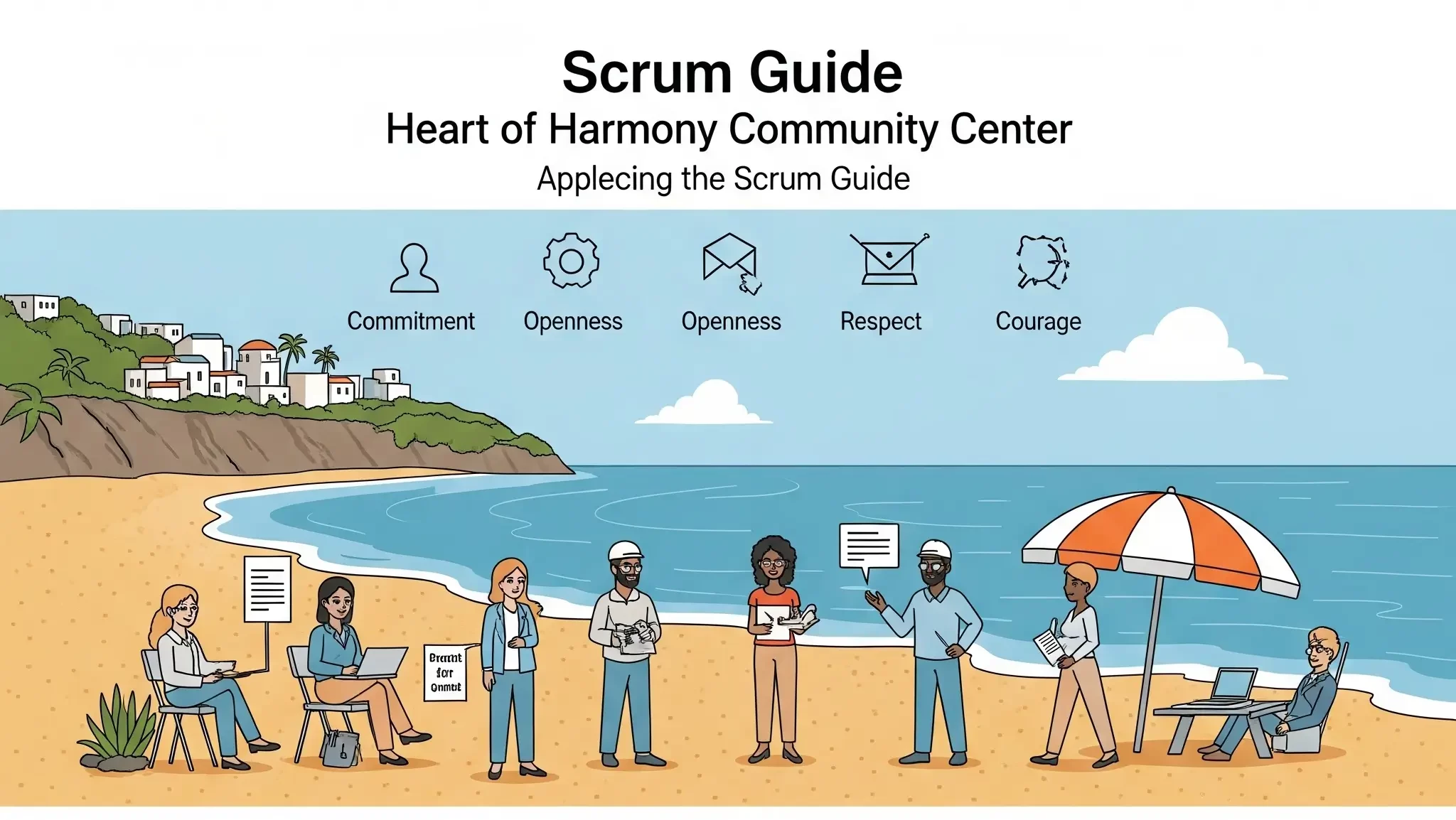
Applying the Scrum Guide to the “Heart of Harmony” Community Center Project
(PSM Exam Prep Focus)
To truly master Scrum for the PSM exam, it’s essential not just to memorize definitions but to understand how the framework’s immutable elements and numerical constraints apply in a real-world, complex scenario.
The “Heart of Harmony” Community Center project, particularly its digital platforms and iterative program development, provides an excellent context. We will strictly adhere to the 2020 Scrum Guide’s precise language and numerical specifications.
1. Scrum Definition & Theory
It requires a Scrum Master to foster an environment where a Product Owner orders work, the Scrum Team turns a selection into an Increment, and the team and stakeholders inspect and adapt.
Example: Instead of a single, massive plan for the entire digital platform, a Scrum Team will deliver small, usable “Increments” every one month or less (our example will use a one-month Sprint).
Empiricism & Lean Thinking
Scrum is founded on empiricism (knowledge from experience, decisions based on observation) and lean thinking (reducing waste, focusing on essentials).
The Five Scrum Values
Successful use of Scrum depends on the “Heart of Harmony” team becoming more proficient in living these values:
The team commits to achieving its Sprint Goals and supporting each other.
The team’s primary focus is on the work of the Sprint.
The team and stakeholders are open about work and challenges.
Team members respect each other as capable, independent people.
The team has the courage to do the right thing and work on tough problems.